
Was this article helpful?
BMW 5 Series Warning Lights: Meaning and Common Faults Explained
A practical guide to BMW 5 Series dashboard warning lights across E60, F10, and G30 generations: colour meanings, how to respond, and the most common faults behind each indicator.
The BMW 5 Series (E60, F10, G30 and newer) uses the standard colour-coded dashboard signalling system with some brand-specific nuances. Red — act immediately. Yellow — schedule a check. Green — assistance systems are active. Knowing the difference can save you from expensive repairs and unnecessary downtime.
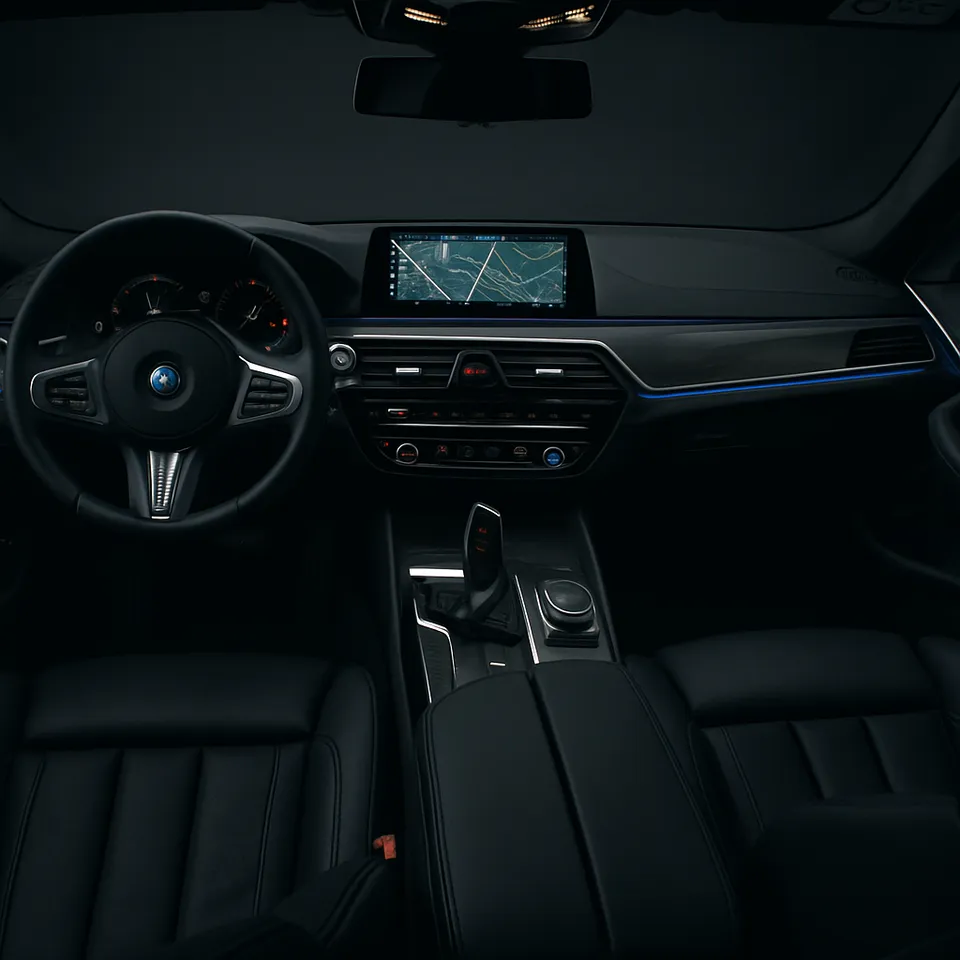
How to respond to BMW 5 Series warning lights
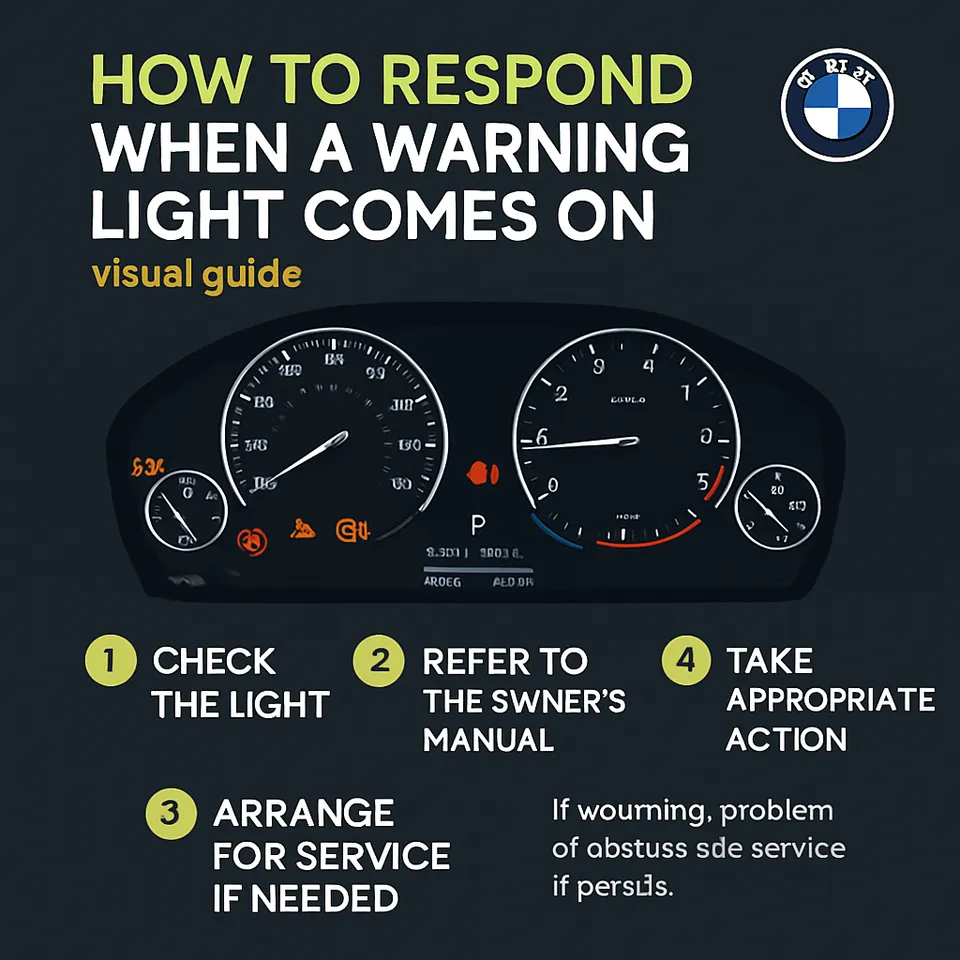
The response algorithm is universal across all BMW 5 Series generations:
- Red indicator (brakes, temperature, oil pressure) — pull over immediately in a safe location and switch off the engine. If the light does not go out after restarting, call a tow truck.
- Yellow indicator (Check Engine, ABS, DSC, tyre pressure) — schedule a diagnostic check. Most yellow warnings allow continued driving, but prompt diagnosis prevents small issues from escalating.
- Green or blue indicator (high beam, cruise control, active safety systems) — informational only; no action required.
For detailed code-level diagnosis, use the DTC code catalogue.
What are the most common BMW 5 Series faults linked to warning lights?
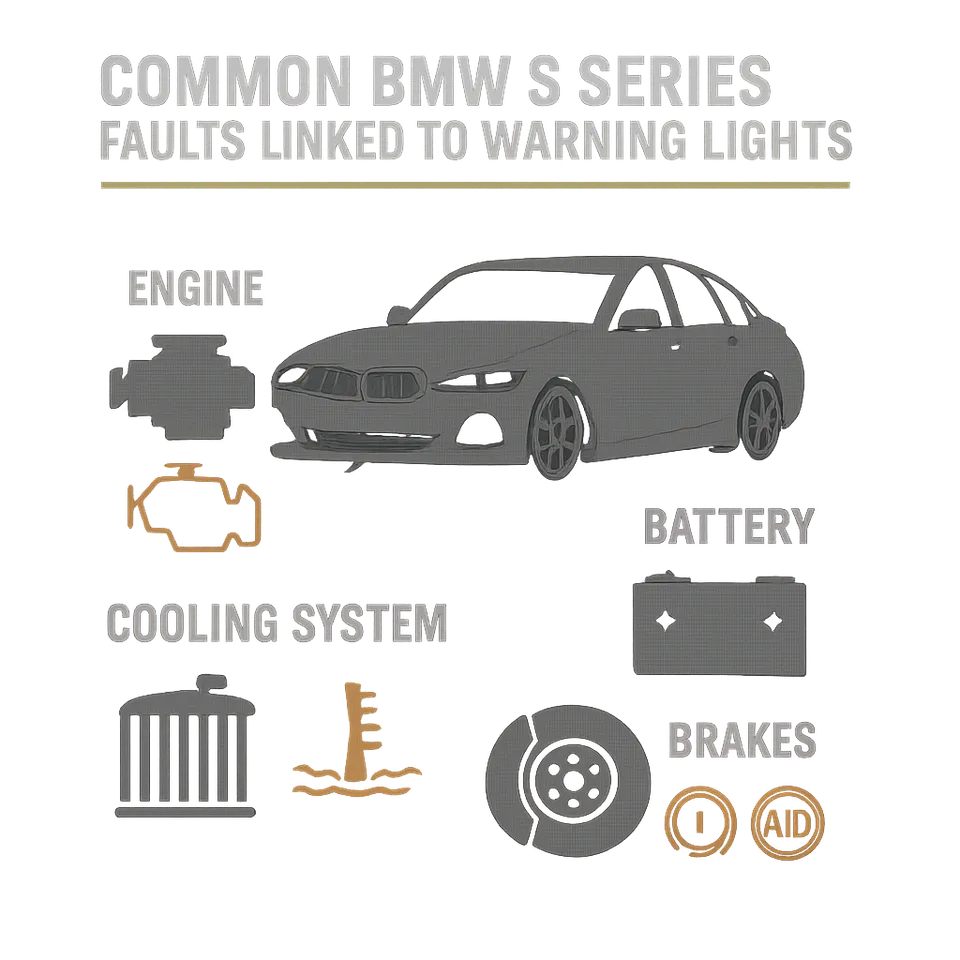
The most frequent problems that trigger dashboard lights on the BMW 5 Series include:
- Oxygen sensors (lambda probes) — the number one cause of Check Engine on petrol versions. A faulty sensor increases fuel consumption and causes rough idling.
- VANOS (variable valve timing) system — characteristic of inline 6-cylinder engines. Triggers the yellow engine light and causes power loss at low RPM.
- ABS/DSC wheel-speed sensors — corrosion-prone, especially on the E60. Activates the yellow ABS light and may disable stability control.
- Coolant leaks — plastic cooling system components (expansion tank, thermostat housing) become brittle with age. A low-coolant warning often precedes overheating.
If you notice unusual vehicle behaviour alongside any warning light, do not postpone the diagnostic check. For a complete reference of all dashboard indicators, visit the warning lights hub. For guidance on connecting an OBD-II adapter and reading codes, see our documentation.
Comments …
Loading…