
Was this article helpful?
Audi A3 Brake Light Warning: What the Brake Indicators Mean
Detailed guide to Audi A3 brake warning lights: red brake symbol, yellow brake pad wear indicator, common faults like wheel-speed sensor failure, and step-by-step diagnostic advice.
The Audi A3 braking system is monitored by several warning indicators that inform you about brake condition. From the red handbrake symbol to the yellow brake pad wear light, each signal has a specific meaning and requires a different response.
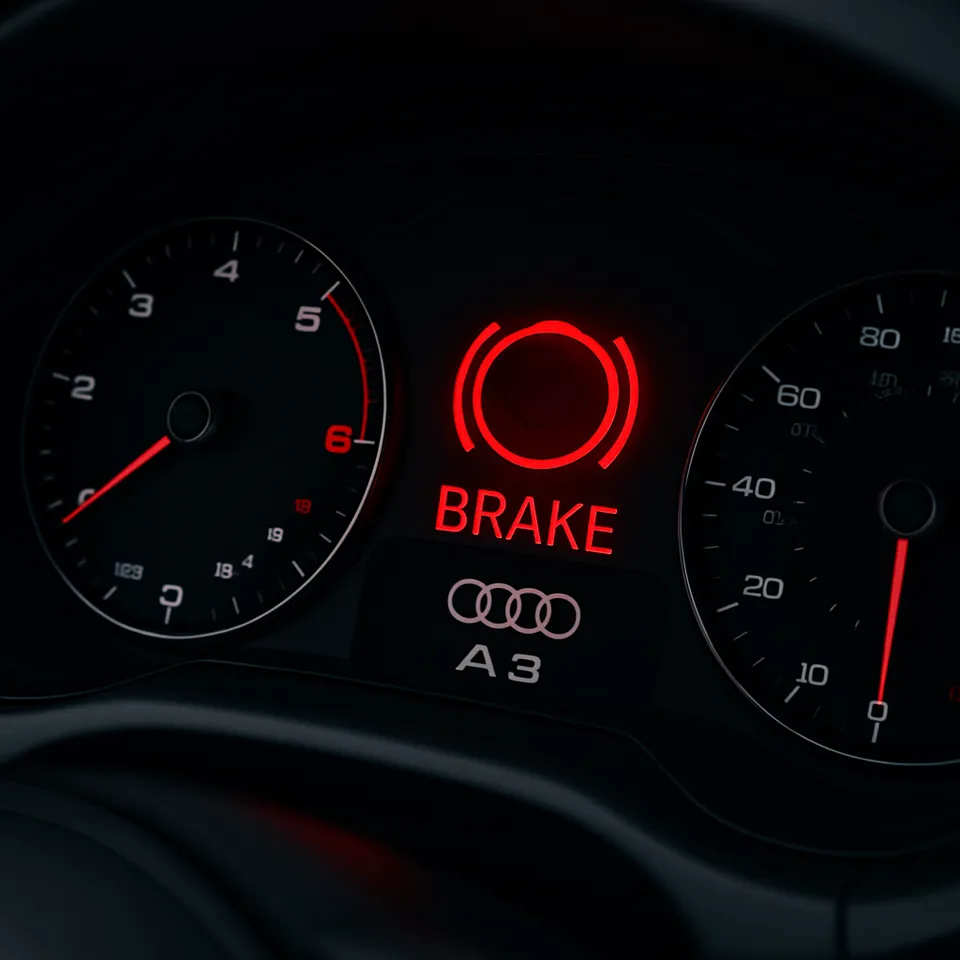
What brake warning lights does the Audi A3 have?
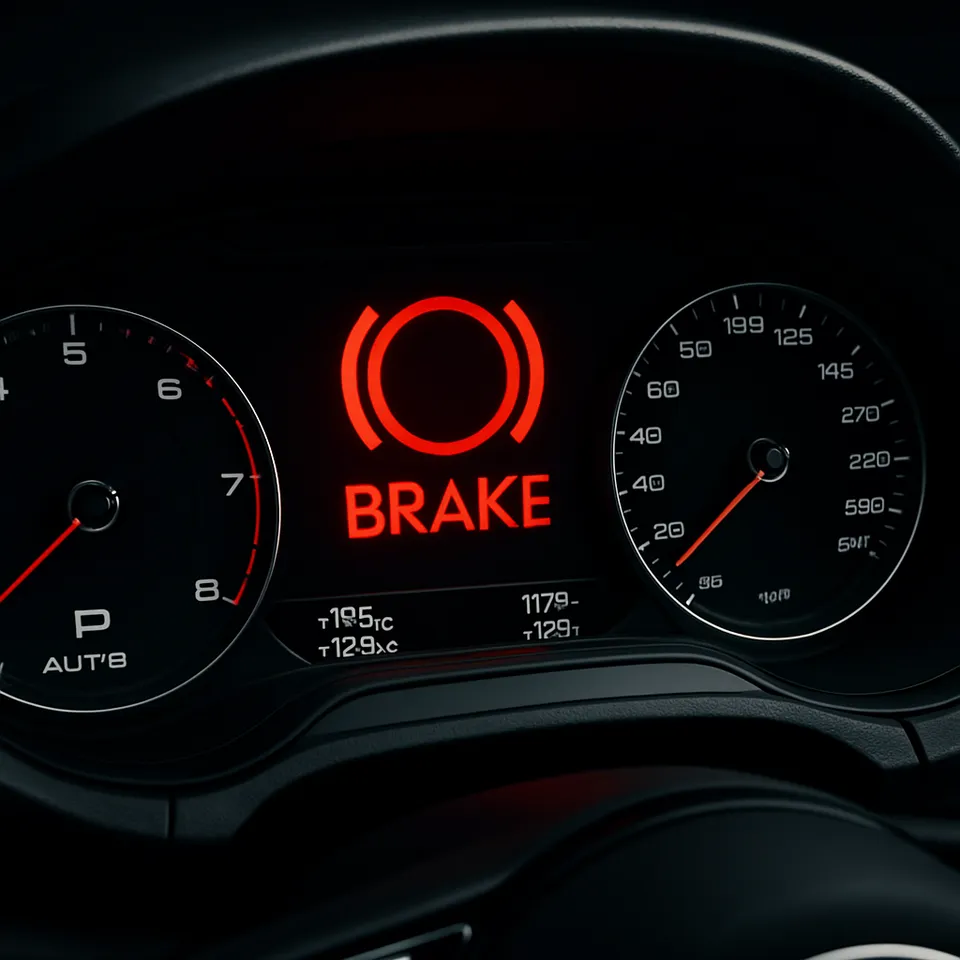
The Audi A3 displays the following brake-related indicators:
| Indicator | Meaning | Urgency |
|---|---|---|
| Red BRAKE or (!) | Brake system fault, low fluid, or handbrake engaged | Immediate — stop and check |
| Yellow “brake pad” or pad wear symbol | Brake pad thickness below 4 mm — wear sensor has tripped | Schedule replacement (500–1000 km left) |
| Red + ABS light together | Wheel-speed sensor fault, e.g. code C0035 | Check braking carefully; visit garage |
If the red brake light stays on while driving with the handbrake fully released, the brake fluid level may be low or there could be a leak in the hydraulic system.
What are the most common Audi A3 brake faults?

The most frequent issues that trigger brake warning lights on the Audi A3 include:
- Worn brake pads — front pads wear faster. The wear sensor completes its circuit when pad thickness drops below 4 mm. Replacing pads on time prevents damage to the brake discs.
- Low brake fluid level — a natural drop occurs as pads wear. A rapid drop points to a leak in the system and requires immediate investigation.
- ABS wheel-speed sensor failure — on the Audi A3 8V, the front wheel-speed sensor is prone to corrosion or dirt contamination. This triggers the red brake light together with the amber ABS light.
- Seized brake caliper — more common on 2013–2016 models. Signs include uneven pad wear and one wheel feeling hotter than the others after a drive.
What to do: a red brake warning requires immediate inspection at a garage. A yellow pad wear light allows you to plan the replacement within the next few hundred kilometres. Never ignore brake warnings — a fully functional braking system is critical for your safety. For all dashboard indicators across car makes, visit our warning lights hub. Step-by-step OBD-II connection instructions are in the documentation.
Comments …
Loading…